History and Origin of the Russian Blue
The Russian Blue cat is a natural breed thought to have originated in the port city of Arkhangelsk, Russia, hence its historical name "Archangel Cat." These cats are believed to have been brought to Europe by sailors in the 19th century, first appearing at cat shows in England in the 1870s. Their luxurious, short silver-blue coat and striking green eyes quickly gained admirers. By the early 1900s, the breed was developed in the United Kingdom and later refined further in the United States and Scandinavia. The Russian Blue gained championship status with major cat registries in the mid-20th century and remains a beloved breed today.
Physical Characteristics
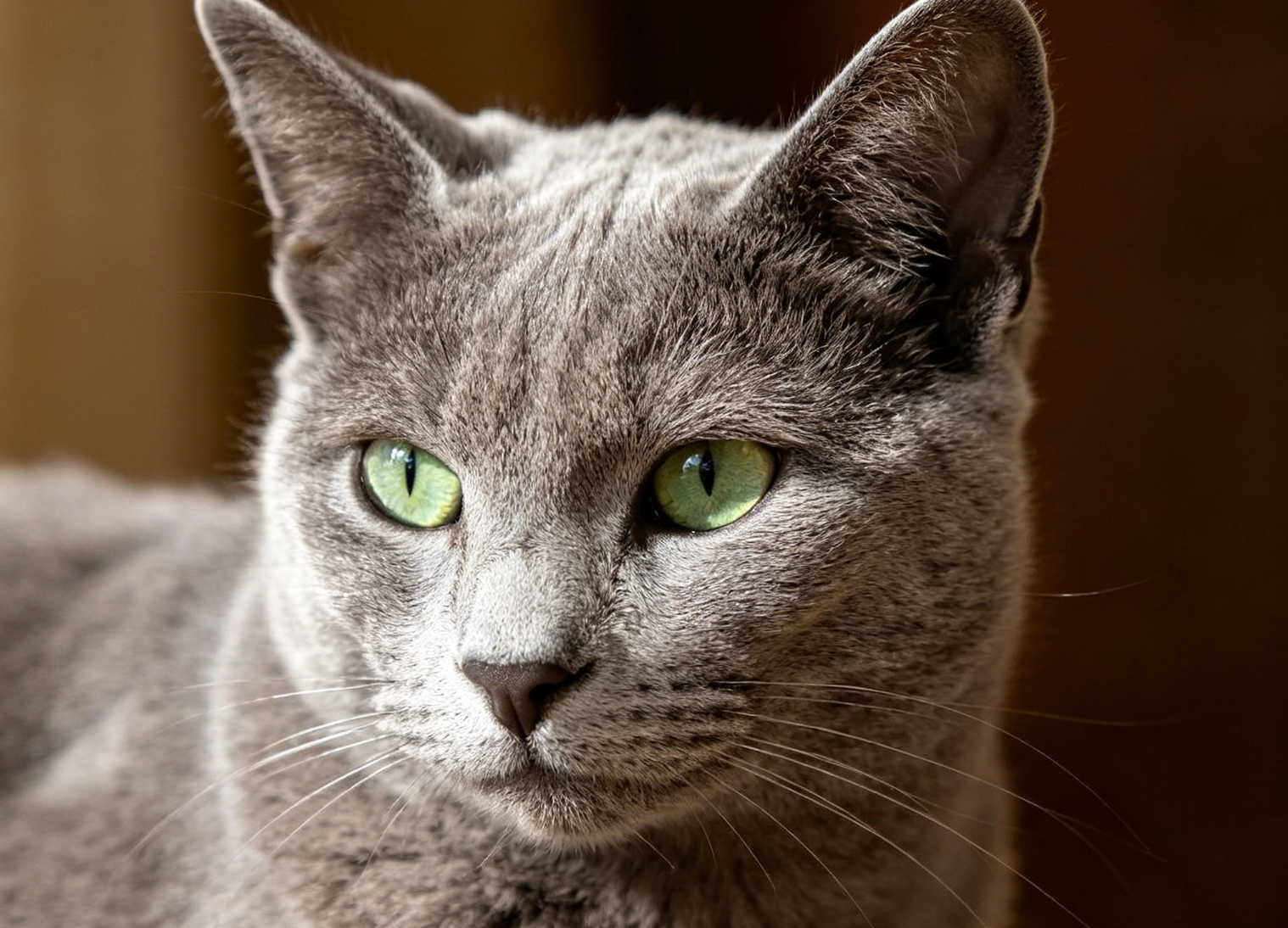
The Russian Blue is a medium-sized, graceful cat with a fine-boned, muscular body. Males typically weigh 10–12 pounds (4.5–5.4 kg), while females weigh 7–10 pounds (3.2–4.5 kg). Their most notable feature is the short, dense, double coat of a uniform silvery-blue color with a shimmering, platinum-like sheen. The coat is plush and soft to the touch, standing out from the body. The head is wedge-shaped with a gentle muzzle, large ears set high, and vivid green eyes that develop by adulthood (kittens start with yellow eyes). The legs are long and slender, and the tail is medium-length and tapering. Their unique coat texture and color make them instantly recognizable.

Temperament and Personality
Russian Blues are known for their gentle, reserved, and intelligent nature. They are affectionate with their families but often shy around strangers. They form strong bonds with their owners and enjoy being near them, often following them from room to room. They are playful and enjoy interactive games, especially with feather wands or puzzle toys, but are not overly demanding. They are generally quiet cats, rarely meowing loudly, and prefer a calm environment. They can be independent but appreciate cuddles on their terms. They get along well with cat-friendly dogs and other pets if properly introduced. Their sensitivity means they do best in a peaceful home without harsh treatment or loud noise.
Suitable Living Conditions
Russian Blues adapt well to various living situations:
Exercise and Mental Stimulation Needs
Russian Blues have moderate energy levels. They need daily play sessions of about 15–20 minutes to stay physically and mentally fit. Interactive toys, fetch games, and puzzle feeders work well. They also enjoy climbing and perching, so a multi-level cat tree or window perches are beneficial. Without enough stimulation, they may become bored or slightly overweight. Rotating toys and providing new challenges helps keep them engaged. They are not hyperactive but appreciate routine playtime.
Grooming Requirements
The Russian Blue's short, dense coat is low-maintenance. Brush once or twice a week with a soft bristle brush or a rubber grooming mitt to remove loose hairs and distribute natural oils. They shed minimally due to their single-layered coat. Bathe only when necessary, as their skin is sensitive. Their ears should be checked weekly and gently wiped with a damp cotton ball if needed. Trim nails every 2–3 weeks and brush teeth regularly with cat-safe toothpaste. Overall, grooming is simple and quick.
Common Health Issues and Life Expectancy
Russian Blues are generally healthy with an average lifespan of 15–20 years, many living into their late teens. However, they may be prone to a few conditions:
Regular vet check-ups and a balanced diet help mitigate risks.
Monthly Care Cost Estimation
| High-quality cat food (dry + wet) | $40–$60 | Litter (clumping or silica) | $15–$25 | Routine vet care (annual divided) | $10–$20 | Grooming supplies (brush, shampoo) | $5–$10 | Toys and treats | $10–$20 | Pet insurance (optional) | $20–$40 | Total monthly estimate | $100–$175 |
Initial costs include adoption/purchase fee ($800–$2,500 from a breeder), vet setup, supplies (litter box, bed, carrier), and spay/neuter. Always adopt from reputable sources.
Final Thoughts
The Russian Blue is a stunning, gentle companion suitable for many households. Their low-shedding coat, quiet demeanor, and affectionate nature make them an excellent choice for first-time owners and experienced cat lovers alike. With proper care, they can be a loving part of your family for many years.